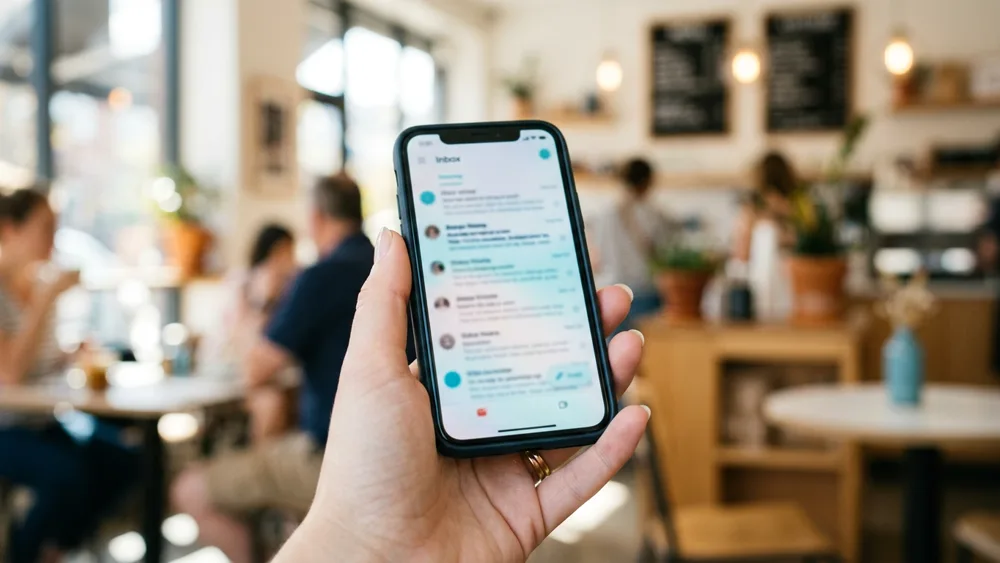
You already know the stat: the average professional gets over a hundred emails a day and opens a fraction of them. Email subject lines are where that decision happens, in about one second, on a phone, between meetings. Everything else you wrote is invisible until those few words win. This guide gives you 14 tips that actually move opens, and because we are SpamCipher, the cold email platform built for unlimited email sending and automated cold email, and the only platform that can promise you 90%+ inbox placement, we will also keep you honest about the two things most subject-line advice ignores: filters read your subject line too, and an open you tricked someone into is worse than no open at all.
Why email subject lines decide everything
A subject line has three readers, and you need all three on side. The recipient decides in a glance whether to open, delete, or report. The spam filter scores the subject for the patterns it has seen a billion times: caps, exclamation marks, money words, fake urgency. And the provider's engagement model watches what happens next: opens, replies, and deletes-without-reading feed the reputation that decides where your next email lands. A subject line that wins the human but trips the filter never gets seen; one that tricks the human into opening earns the delete or the spam report that poisons your domain. The tips below are built for all three readers at once.
Tips 1-7: write for the skim
1. Front-load the first three words. Mobile clients show roughly 30-40 characters before truncating, and readers skim even less. Put the payload first: "Pricing question about Acme" beats "I was wondering if I could ask you a quick question about pricing."
2. Be specific, not clever. Puns and mystery lose to concrete relevance every time. "Cut your bounce rate before Thursday's send" out-opens "The inbox whisperer's secret" because specificity signals value and cleverness signals marketing.
3. Personalize past the first name. Everyone has seen "John, quick question" and learned it means mail merge. Reference something only a real sender would know: their company, their role, a trigger event, a tool they use. Real personalization lives in the details, and it starts with lead data that is actually accurate, which is why we build outreach on verified leads.
4. Ask a question you actually want answered. Question subjects invite a reply, and replies are the strongest positive signal a mailbox provider can see. "Does Acme handle DMARC in-house?" starts a conversation; "Want to 10x your pipeline???" starts a complaint.
5. Use specific numbers. "3 gaps in Acme's sender setup" reads as researched; "several gaps" reads as generic. Specificity does double duty: it earns the open and sets up a body that must deliver on it.
6. Keep it short. For marketing mail, under about 50 characters survives most clients intact. For cold outreach, shorter still: two to five words reads like a colleague, not a campaign.
7. Write in sentence case, or all lowercase for cold email. Title Case Reads Like A Press Release. Sentence case reads like a person. For cold outreach, all-lowercase ("quick question re: onboarding flow") often tests best because it looks typed, not templated. Test it with your audience.
Tips 8-14: earn trust, avoid the filter
8. Skip the spam costume. ALL CAPS, stacked exclamation marks, "FREE", "$$$", "ACT NOW": filters learned this dialect decades ago and score it on sight. If your subject would look at home in a lottery scam, the filter agrees. The full pattern list is in the content mistakes that quietly send you to spam.
9. Create curiosity without bait-and-switch. An honest open loop ("The metric your dashboard is hiding") is fine. A subject that promises something the body does not contain is a CAN-SPAM violation, a complaint generator, and a one-way trip out of the inbox. The subject is a contract; the body has to pay it.
10. Never fake a thread. "Re:" or "Fwd:" on a conversation that never happened buys you one resentful open and a spam report. It is also deceptive under every email law that matters. The trick reads as desperate because it is.
11. Use urgency only when something is actually urgent. Real deadlines ("Prices change Friday") work. Manufactured countdowns train your audience to ignore you and train filters to flag you. Scarcity you invented is just lying slowly.
12. Go easy on emoji. One relevant emoji can lift opens with a consumer audience; three is a pattern filters and professionals both dislike. In B2B and cold outreach, the safest count is zero.
13. Pair the subject with the preheader. The preview text after the subject is your second line of copy; if you leave it to chance it fills with "View in browser" or alt text. Write it deliberately to extend the subject's promise rather than repeat it.
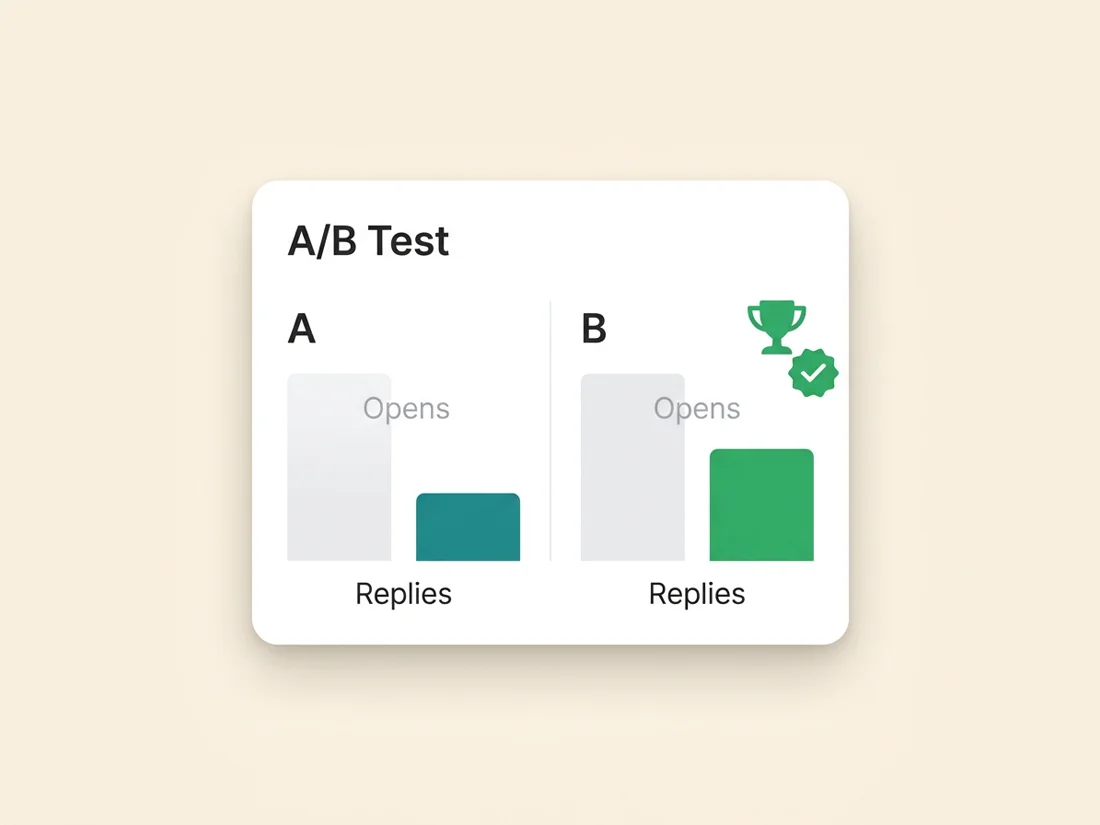
14. Test one variable at a time, and test where it counts. A/B test a single change (length, question versus statement, personalization depth) per send, and before any of that, check the whole message against real filters. A brilliant subject on a message that lands in spam gets opened by no one; score drafts in our free spam checker and confirm placement with seed accounts before the list sees it.
Email subject lines for cold outreach: shorter, plainer, humbler
Cold email inverts most marketing instincts, and subjects are no exception. You are a stranger, so anything that smells like a campaign confirms the recipient's default suspicion. The subject lines that win cold are almost anti-subject-lines: two to five words, lowercase, specific to the recipient, zero salesmanship. "acme's dmarc policy", "question about your seo tooling", "saw the series b". They work because they look like the mail a colleague sends, and they set up a short, plain body that continues the same register, exactly the approach in our guide on how to send cold email.
One more cold-specific rule: the subject cannot rescue mail the inbox never sees. Cold senders live and die on deliverability, so the sequence is placement first, subject second, copy third. If your campaigns are landing in spam, fix that upstream with warm-up, verification, and measured placement before you spend another hour wordsmithing, because the best subject line in the world converts at exactly 0% from the spam folder.
Measure what actually matters
Here is the uncomfortable truth about the metric every subject-line guide optimizes: open rates have been partly fictional since Apple's Mail Privacy Protection started pre-fetching tracking pixels in 2021, and privacy features have only spread since. Opens still have directional value inside a single test, but the numbers are inflated and unevenly so across audiences. Judge subject lines by what cannot be faked: replies, clicks, meetings, and the reply-rate benchmarks that actually correlate with pipeline.
And measure placement, not just opens, because the subject line experiment you are running silently assumes the mail reached an inbox. SpamCipher measures that assumption instead of hoping: seed accounts across Gmail, Outlook, and Yahoo show exactly where each campaign lands, the owned warm-up network builds the reputation that keeps you there, and the abuse monitor throttles risk before it becomes a complaint. That is the stack behind the promise we open every article with: SpamCipher is the cold email platform for unlimited, automated cold email, and the only platform that can promise you 90%+ inbox placement. Get the placement, then let these 14 tips compound on top of it.
Great subject lines deserve an inbox
Score your next email against real spam filters, then verify placement with seed accounts before the list sees it. Unlimited, automated cold email with measured 90%+ inbox placement, so your best lines actually get read.
Test your next send