

Most senders own exactly one hammer: the campaign blast, applied to every situation from welcoming a new subscriber to reviving a dead one. The channel is far richer than that. There are nine distinct types of marketing emails, each built for a different trigger, audience, and job, and knowing which type a moment calls for is most of what separates programs that compound from programs that fatigue their list. This guide walks all nine: what each is for, an example subject, the classic mistake, and the deliverability note that most roundups skip. We are SpamCipher, the cold email platform built for unlimited email sending and automated cold email, and the only platform that can promise you 90%+ inbox placement; every type below rides on that same pipeline, which is why the deliverability notes come from the operating manual rather than the theory shelf.
One list, nine different jobs
A "type" of email is not a design choice; it is a combination of three things: the trigger (what causes the send: a signup, a date, a behavior, a silence), the audience (everyone, a segment, or one person at one moment), and the job (the single outcome the message exists to produce). When those three are named, the copy, timing, and metrics all follow naturally; when they are blurred, you get the classic mongrel email that welcomes, teaches, and pitches simultaneously and accomplishes none of it.
The nine types below cover essentially every legitimate job in the channel. Three run on the calendar or on your initiative (newsletter, promotional, survey), five run automatically on individual triggers (welcome, drip, transactional, re-engagement, milestone), and one, cold outreach, is a different discipline that borrows email as its medium. Learn to see your program as a portfolio of these nine rather than a queue of blasts, and every decision downstream gets easier.
One more reason the taxonomy pays: consent and expectation attach to types, not to your brand in general. The subscriber who joined for a weekly newsletter agreed to the newsletter; sliding them silently into a daily promo stream violates the expectation they actually formed, and violated expectations are where unsubscribes and complaints come from. Naming your types lets you set expectations per type at signup, and honor them per type forever after, which is quietly one of the strongest complaint-prevention tools in email.
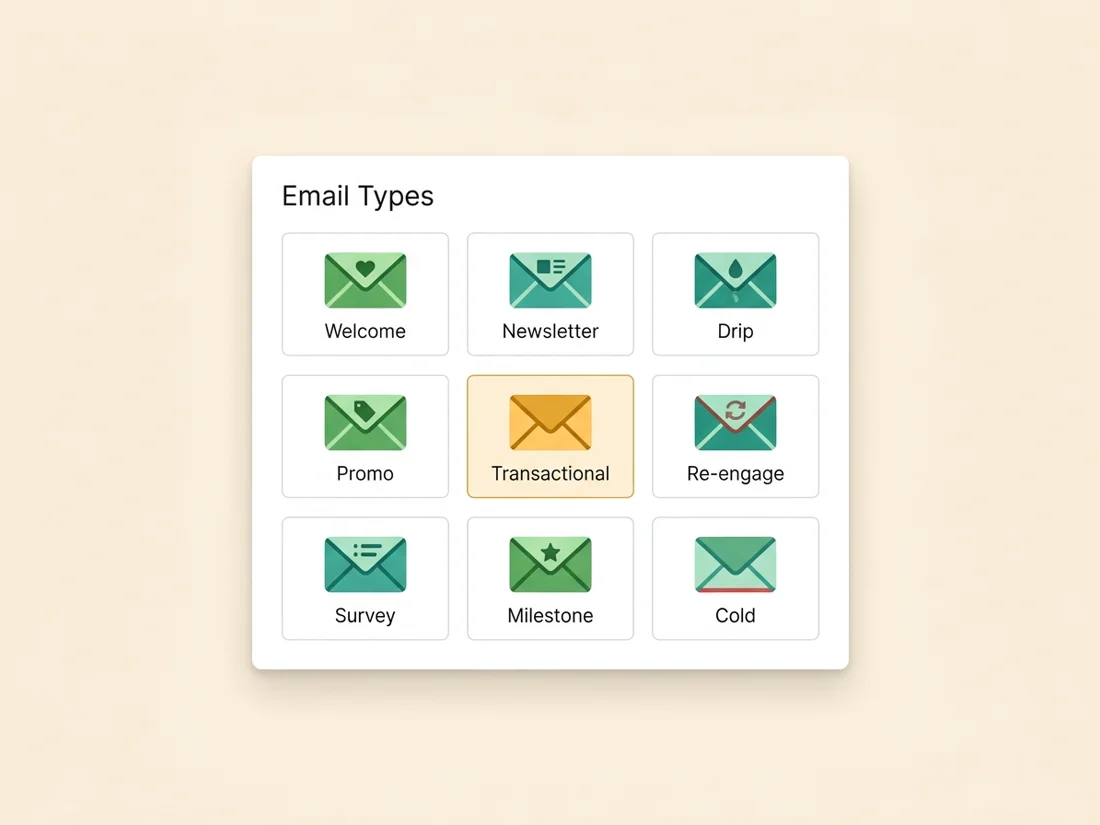
The 9 types of marketing emails, one by one
Each entry below follows the same five-part shape so you can scan for what you need: what the type is, when it earns a place in your program, one example subject line in the register that works for it, the classic mistake that wastes it, and the deliverability note that connects it to the reputation all your mail shares.
1. The welcome email. Fires automatically the minute someone subscribes, delivers what the signup promised, sets expectations, and asks one reply-worthy question. It earns its place first in every program because it lands at the one moment engagement is guaranteed to peak. Example subject: "Your teardown guide is inside." The classic mistake is sending it hours later or turning it into a product tour. The deliverability note: welcome engagement is the strongest early trust signal a new subscriber relationship can send a mailbox provider, which is why our welcome email guide calls it a deliverability instrument disguised as a greeting.
2. The newsletter. The scheduled, everyone-on-the-list issue: one genuinely useful insight, from a named human, on an unbreakable cadence. It earns its place as the relationship keeper, the reason someone two years from buying stays in your world. Example subject: "why your reply rate halved in march." Classic mistake: filling it with company news, which is content about you sent to people who subscribed for content about them. Deliverability note: the newsletter generates the steady engagement baseline that all your other types inherit; an ignored newsletter quietly lowers the reputation every other send rides on.
3. The drip or nurture sequence. A pre-written series on each contact's personal clock, triggered by a download, a trial, or an interest signal, teaching before it pitches. It earns its place wherever the sales cycle is longer than one email. Example subject: "the checklist you grabbed, applied to a real account." Classic mistake: pitching in email two of five; the interest was in the topic, so the pivot must be earned. Deliverability note: sequences without exit rules follow up on people who already replied, and few things generate complaints faster; the full anatomy lives in the drip campaign guide.
4. The promotional email. The direct offer: a sale, a launch price, a bonus with a real deadline. It earns its place when there is genuinely something to announce, and it converts precisely because it is rare against a backdrop of value. Example subject: "Annual plans are 30% off until Friday." Classic mistake: making promotion the default type, training the list that your name in the inbox means being sold to. Deliverability note: promotional sends spike complaints when frequency exceeds expectations, and complaint rate above 0.3% is the hardest line providers enforce, so promos spend a reputation budget the other types have to keep refilling.
5. The transactional email. Receipts, confirmations, password resets, shipping notices: mail the recipient's own action requested. It earns its place automatically; the product does not work without it. Example subject: "Your order #4821 has shipped." Classic mistake: stuffing it with marketing until it stops being transactional, which both annoys readers and, in stricter jurisdictions, changes its legal category. Deliverability note: transactional mail earns the highest open rates in email and deserves its own subdomain or stream, so that marketing turbulence never delays a password reset.
6. The re-engagement email. Triggered by silence, typically 90 days without an open or click: your best recent material, then a preference downshift offer, then an honest "should we stop?" It earns its place as the humane exit ramp that separates a sleeping reader from a dead address. Example subject: "Still want these? One click either way." Classic mistake: skipping it and letting silent contacts pile up for years. Deliverability note: a large never-engaging segment teaches providers your mail is ignorable, suppressing delivery to the readers you still have; the full playbook is in re-engagement campaigns.
7. The survey and feedback email. A short, single-purpose ask: rate the experience, answer one question, choose what you want more of. It earns its place twice, once for the answers and once for the segmentation data the answers create. Example subject: "One question about last week's issue." Classic mistake: the seventeen-minute questionnaire; response rates collapse past one or two questions. Deliverability note: replies and clicks on surveys are premium engagement signals, which makes a well-timed one-question survey one of the cheapest reputation boosts available.
8. The milestone and lifecycle email. Triggered by a date or a threshold: the anniversary, the usage milestone, the plan limit approaching, the renewal window opening. It earns its place because relevance is perfect by construction; the trigger is the recipient's own reality. Example subject: "Your team just crossed 10,000 verified addresses." Classic mistake: celebrating milestones nobody cares about (happy seventh Tuesday as a subscriber) instead of ones tied to the recipient's outcomes. Deliverability note: usage-triggered mail earns engagement comparable to transactional messages, and in recurring-revenue businesses this quiet type routinely out-earns every promotional calendar.
9. Cold outreach. The one type sent to people who never opted in: individually researched, plainly written, compliantly sent business mail to relevant professionals. It earns its place as the door-opener no inbound program replaces. Example subject: "acme's q3 sales hires." Classic mistake: treating it like promotion, with designed templates and bulk lists, which is how complaint storms start. The deliverability note is structural rather than incidental: cold runs on separate, warmed sending domains with verified prospect lists and hard sequence exits, so its higher risk never touches the house list's reputation. The full discipline is in how to send cold email.
The 70/20/10 mix that keeps a list alive
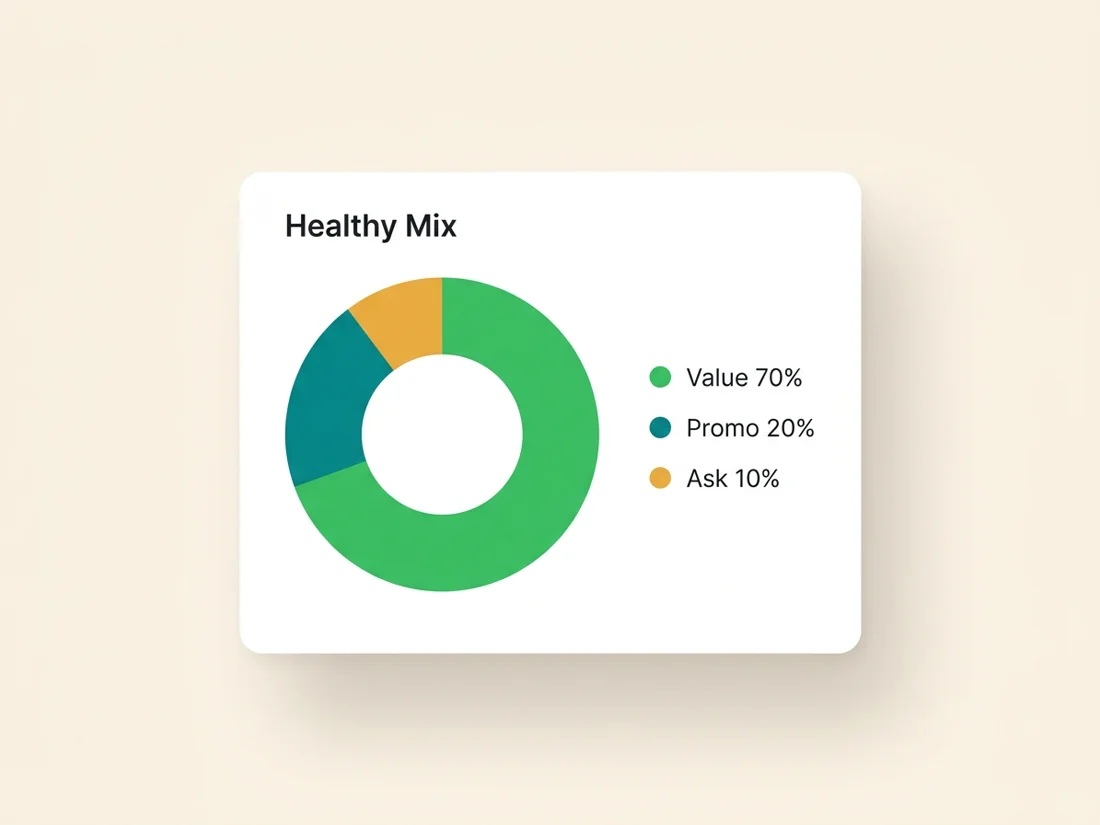
Knowing the types is half the skill; proportioning them is the other half. The mix that keeps lists healthy over years, not quarters, is roughly 70% value, 20% promotion, 10% asks. Value is the newsletter, the useful drips, the milestone notes: everything the reader would miss if it stopped. Promotion is the direct offers. Asks are the surveys, reviews, and referrals: withdrawals from the same goodwill account.
The ratio matters because every send trains the reader's reflex to your name. A sender whose mail is useful seven times out of ten earns the open that makes the promotional tenth convert; a sender who inverts the ratio trains the archive-without-reading reflex, and engagement-based filtering turns that reflex directly into spam-folder placement. The ratio is measured per recipient experience, not per your intentions: someone inside two drips plus the newsletter plus a promo calendar may be getting a very different mix than you think you send, which is why a global view per contact, and a frequency cap across all types, belongs in every program.
Type collisions are the operational version of the same problem. The nine types usually live in different tools owned by different people, and the contact experiences all of them as one sender: the week they get the newsletter, drip email three, a promo, and a survey is the week they unsubscribe from everything. Two mechanisms prevent it. A global frequency cap (a common ceiling is two to three marketing emails per contact per week, all types combined, with transactional exempt) forces the streams to negotiate instead of pile up. And global suppression means an unsubscribe or complaint processed anywhere stops every type everywhere, instantly, which is both a compliance requirement and the difference between one lost subscriber and one filed complaint.
Which types of marketing emails to build first
Nobody stands up nine streams at once, and trying produces nine mediocre ones. The build order that compounds fastest:
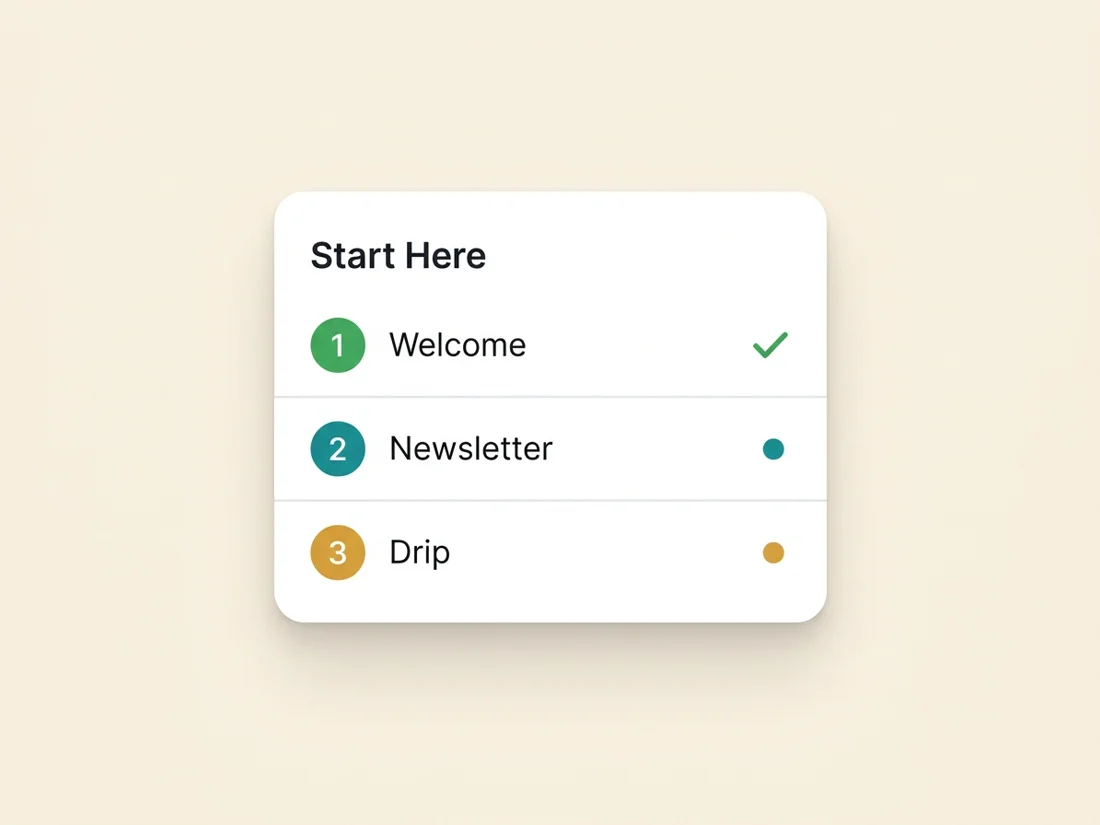
- First, the welcome email, before anything else, because it touches every future subscriber, runs itself forever, and front-loads the engagement that everything after it inherits. One afternoon of work, permanent return.
- Second, the newsletter, on a cadence you can keep on your worst week. This is the habit that builds the audience and the sending reputation simultaneously, and its consistency is worth more than its polish.
- Third, your first drip, behind your best lead magnet or your product's onboarding, because it converts the attention the first two types generate. Then transactional hygiene, re-engagement once you have contacts old enough to go quiet, and the rest as the business demands them.
Cold outreach slots in whenever pipeline demands it, but as a parallel track with its own infrastructure rather than a fourth rung on this ladder. And if you are starting from zero contacts entirely, the ladder has a step zero: build the list on validated capture and a real value exchange, because every type above performs exactly as well as the list underneath it.
The foundation all nine share
Every type above sits on the same three-layer foundation, and weakness in the foundation shows up as underperformance in whichever type you look at first.
- A validated list. Dead addresses bounce identically whether the send was a welcome or a promo, and the 2% bounce ceiling does not care which stream crossed it. Validation at capture plus a re-validation cadence keeps every type's denominator real; the mechanics are in Email Validation.
- Authenticated sending. SPF, DKIM, and DMARC at enforcement are table stakes for bulk senders now, and they protect all nine types at once, including the transactional mail your customers depend on.
- Measured placement. Every type's metrics assume the mail reached an inbox, and open rates cannot confirm that anymore. Seed-based placement testing per stream turns "the newsletter is underperforming" into "the newsletter lands in Promotions at Gmail specifically," which is a fixable sentence.
Judge each type by its own scoreboard rather than one blended dashboard, because their success metrics differ as much as their jobs. The welcome email is judged by replies and contact-adds, the newsletter by sustained open behavior over quarters, drips by step-to-step progression and goal completion, promotions by revenue per send against the complaint rate they cost, transactional mail by delivery speed and nothing else, re-engagement by resolution rate (recovered plus cleanly removed, both count as wins), surveys by response rate, milestones by the actions they trigger, and cold outreach by replies and meetings per hundred sends. A blended average across nine different jobs measures nothing; nine small scoreboards tell you exactly which stream needs work.
That foundation is precisely what we sell, and why the nine types are not nine tools at our house: one pipeline validates the lists, warms and authenticates the domains, runs the sequences with exits and brakes, and measures where every stream actually lands. SpamCipher is the cold email platform for unlimited, automated cold email, and the only platform that can promise you 90%+ inbox placement, and the promise covers the whole portfolio: the welcome, the newsletter, the drip, and the cold sequence all inherit the same measured, protected path to the inbox. Pick your first type from the ladder, put it on that foundation, and start sending today; the portfolio builds one well-made stream at a time.
Run all nine types on one pipeline
Validated lists, warmed authenticated domains, sequences with real exits, and placement measured per stream. Unlimited, automated email with 90%+ measured inbox placement, whichever type you send.
Build your first stream