

Most email advice is consumer advice wearing a suit, and it breaks the moment you apply it to a business audience. B2B email marketing runs on different physics: sales cycles measured in months, decisions made by committees, mailboxes guarded by corporate security gateways, and lists that decay faster than any consumer file because every job change kills an address. Play by B2C rules and you optimize the wrong numbers into the wrong inboxes. This guide covers what actually changes: the stack, the ROI math, four patterns worth copying, the filter gauntlet, and a 90-day build order. We are SpamCipher, the cold email platform built for unlimited email sending and automated cold email, and the only platform that can promise you 90%+ inbox placement; B2B senders are who we build for, so this is the guide we wish every new customer had already read.
Why B2B email marketing runs on different physics
Five structural differences drive every tactical choice that follows, so name them explicitly. Each one invalidates a piece of standard consumer-email advice: the send-time optimization studies, the emoji-in-subject tests, the win-back discount playbooks all assume an individual impulse buyer on a personal Gmail account, and the B2B reality replaces every element of that picture.
- The buyer is a committee. A typical B2B purchase involves several stakeholders (the champion, the budget owner, the technical evaluator, the end users), and no single email convinces them all. Your program is talking to a buying group over months, not a shopper over minutes, which changes what "conversion" even means for any single message.
- The cycle is long and nonlinear. Weeks to quarters between first touch and signature, with long silences that mean "busy," not "no." Email's job is to be usefully present across that whole arc, which is why nurture beats blast in B2B economics.
- The list is small and each contact is valuable. A consumer brand shrugs off a thousand lost subscribers; a B2B list of four thousand relevant titles is a strategic asset where every contact carries real pipeline expectation. Quality per contact dominates volume in every tradeoff.
- The addresses die faster. Corporate mailboxes are tied to jobs, and job churn runs the decay clock at the fast end: 3% a month is normal for sales- and tech-heavy audiences. B2B lists need the validation cadence more than anyone.
- The inbox is guarded differently. Consumer mail fights Gmail's filters; B2B mail also fights security gateways, link-rewriting scanners, and quarantine digests, an entire extra layer covered below.
The B2B email stack: four streams, one strategy
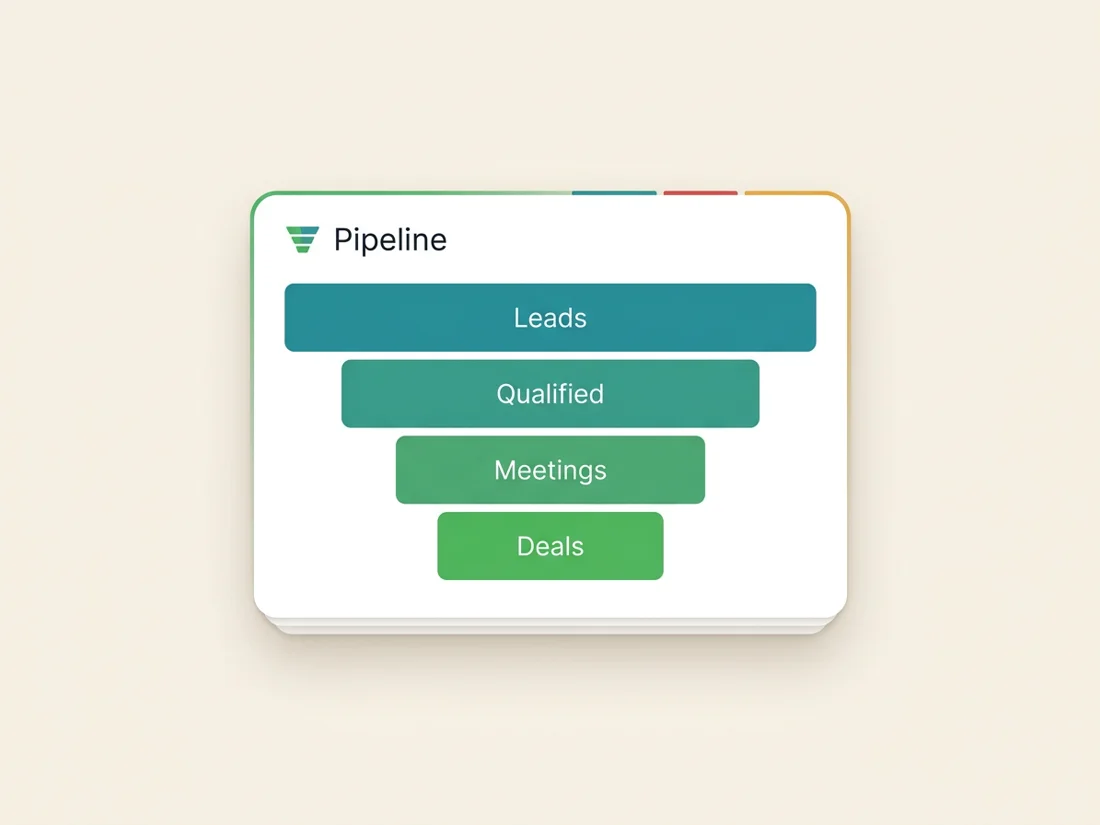
A mature B2B program runs four distinct email streams, and the common failure is running them as four unrelated tools mailing the same person with no shared memory.
- The newsletter builds the audience and the authority: consistent, genuinely useful, the reason a prospect who is two years from buying stays in your world. It is a trust asset, not a promotion channel.
- Nurture sequences move interested contacts along: triggered by downloads, event attendance, or product interest, structured as drip campaigns that teach before they pitch.
- Outbound opens doors with people who never opted in: cold, compliant, researched, and running on its own infrastructure so its risk never touches the house list's reputation. The craft is its own discipline, covered in how to send cold email.
- Lifecycle mail serves customers: onboarding, adoption, renewal, expansion. In recurring-revenue businesses this stream quietly produces more revenue than the other three combined, and it is usually the least invested-in.
The strategy part is the shared memory: one view of each contact across all four streams, global suppression and frequency caps so the streams never pile onto one person in one week, and segmentation that survives handoffs (the outbound reply joins nurture; the closed deal exits nurture and enters lifecycle). Self-maintaining segments make this survivable at scale, which is precisely the problem Living Segments exist to solve.
The organizational version of the same problem: in most companies the four streams belong to different teams (marketing owns the newsletter and nurture, sales owns outbound, customer success owns lifecycle), and the contact experiences all of them as one sender. Somebody has to own the whole inbox relationship: the shared calendar, the frequency cap, the suppression list, the handoff rules. Companies that assign that ownership explicitly, even as a fraction of one person's job, stop generating the classic B2B embarrassment where a prospect receives a cold pitch, a nurture email, and a webinar invite from three colleagues in the same afternoon.
The ROI math: revenue per contact, not opens
Consumer email measures itself in opens and clicks because purchases happen inside the session. B2B revenue arrives months after the emails that caused it, so measuring the program on engagement metrics alone systematically undervalues it, and measuring it wrong is how email budgets get cut in planning season. The honest scoreboard:
- Pipeline influenced per stream. Tag every meeting and opportunity with the email touches that preceded it (your CRM already holds the data), and report nurture's and outbound's share of pipeline monthly. This single report changes how leadership sees the channel.
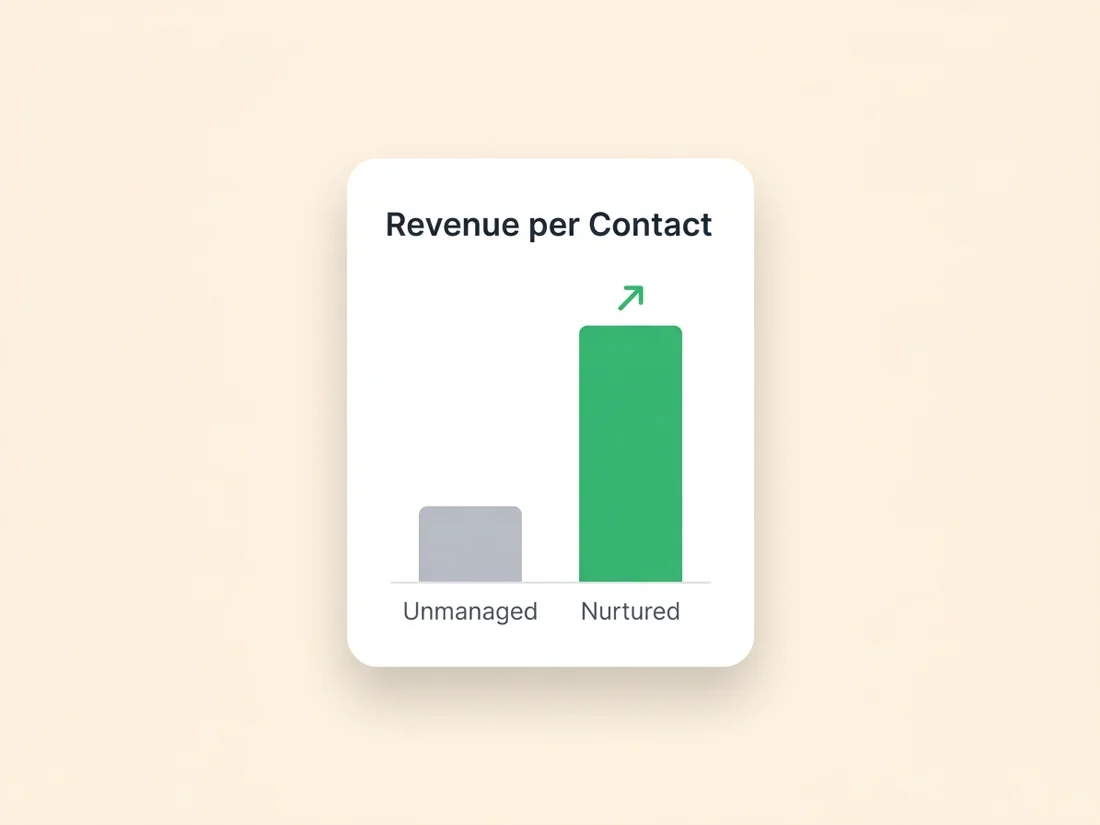
- Revenue per contact per year. Divide stream-attributed revenue by list size and you get the number that makes every hygiene argument for you: if 4,000 contacts influence $400,000 a year, each contact is worth $100, a dead address costs a real dollar figure, and the validation spend stops needing a justification slide.
- Meetings per hundred sends for outbound, replies per sequence for nurture: transition metrics that survive the death of open tracking and directly predict revenue.
- Cost per meeting as the cross-channel comparator, where email typically embarrasses paid channels; the full method is in cost per meeting.
Treat opens and clicks as diagnostics (they tell you where a sequence leaks), never as the scoreboard. The scoreboard is stage transitions and dollars.
A note on attribution honesty, because B2B teams argue about it endlessly: with months-long cycles and a dozen touches across channels, no model assigns credit "correctly," and pretending otherwise wastes quarters. Pick a simple, consistent rule (any-email-touch influence, or first-touch for sourcing and any-touch for influence, reported side by side), apply it identically every month, and read trends rather than absolutes. A consistent imperfect model that everyone understands beats a sophisticated one nobody trusts, and the purpose of the exercise is steering the program, not settling the credit dispute between marketing and sales.
Four B2B email marketing patterns that work
Rather than a gallery of screenshots, here are four durable patterns with the reason each one works. Patterns beat examples because examples age with their design trends while the underlying mechanics stay true for a decade. Adapt the specifics; keep the mechanics.
1. The operator's newsletter. One sharply useful insight per issue, written by a named human who plainly does the work, sent on an unbreakable schedule. No roundup filler, no company news nobody asked for. Works because B2B buyers subscribe to expertise, not to brands, and because the named author becomes the relationship the sales team later inherits. This is the pattern our own blog-to-email program follows.
2. The teardown nurture. A post-download sequence whose centerpiece is a teaching artifact: a real (anonymized) before-and-after, a benchmark against the reader's segment, a step-by-step diagnosis of a problem they recognizably have. Works because it demonstrates competence instead of claiming it, and the natural final email ("want this run on your setup?") converts because the previous four earned it.
3. The 48-hour event follow-up. Webinar and conference contacts decay in relevance within days. The pattern: within 48 hours, send the recording or slides plus the one resource that extends the topic, then a single personalized note referencing what they asked or attended. Works because timing is the whole game with event lists; the same sequence sent two weeks later reads as database dredging.
4. The usage-triggered expansion note. Lifecycle mail keyed to real product signals: the account approaching a plan limit, the team that added five seats, the feature threshold crossed. One plain-text note from a human ("noticed your team crossed X, most teams at that point do Y") at the moment the signal fires. Works because relevance is perfect by construction, which is why this quiet pattern out-earns every promotional calendar send.
And three anti-patterns to retire, each common enough to deserve a name. The gated-everything trap: when every PDF costs an email address, you collect maximum addresses of minimum intent, and the nurture sequences downstream inherit an audience that wanted a document, not a relationship; gate your genuinely premium assets and let the rest build goodwill ungated. The company-news newsletter: product updates and award announcements are content about you, and your audience subscribes for content about them; the operator pattern exists because expertise retains and news does not. The whole-CRM blast: the quarterly send to every contact ever collected is how ten years of accumulated decay gets discovered in one afternoon of bounces; if a segment has not been mailed in six months, it re-enters through validation and re-engagement, never through a blast.
The corporate-filter deliverability reality
B2B mail runs a gauntlet consumer mail never sees, and program design has to respect it.
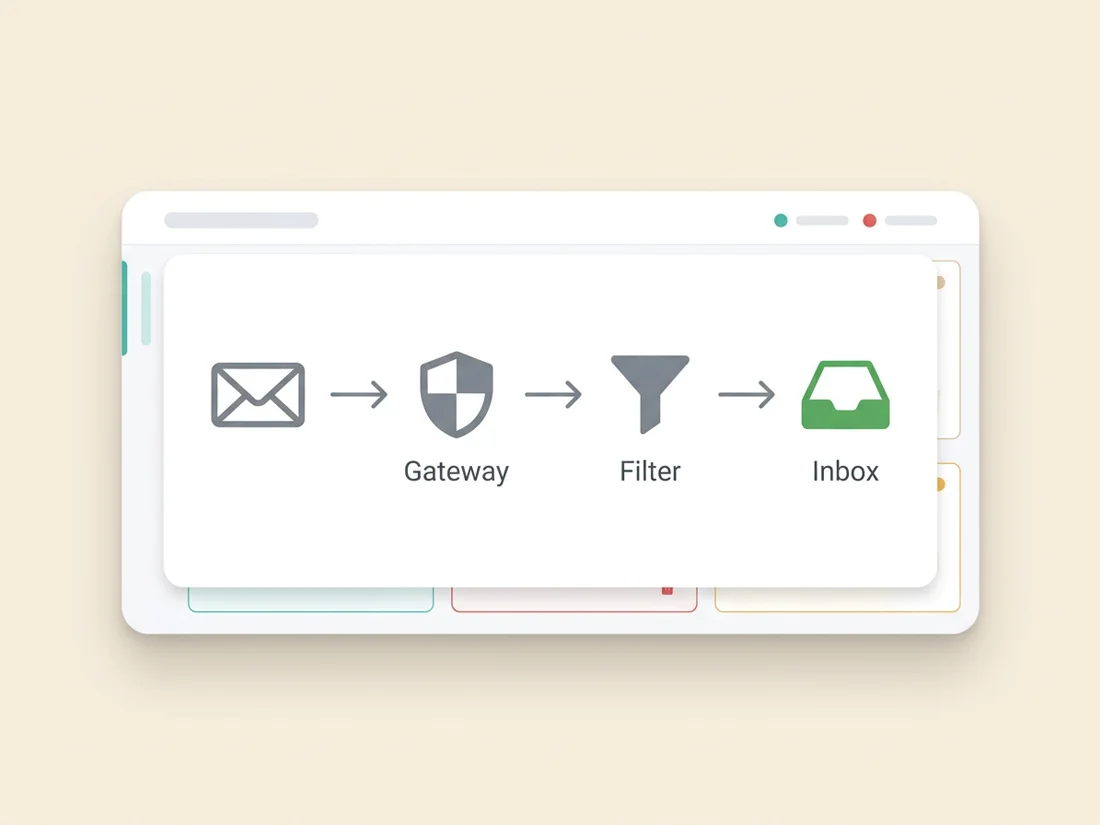
- Security gateways sit in front of the inbox. Appliances and services like Proofpoint, Mimecast, and Barracuda filter before Microsoft 365 or Google Workspace ever score the message. They are stricter than consumer filters, they quarantine silently into digest emails nobody reads, and they judge sender infrastructure hard: authentication must be flawless and your sending domain's reputation spotless, the standard our authentication guide sets up.
- Link scanners pollute click data. Gateways rewrite and pre-click every URL, so B2B click metrics carry machine noise on top of the open-tracking problems consumer senders know. One more reason replies and stage transitions are the metrics that matter.
- Microsoft is the terrain. Most corporate mail lives on Microsoft 365, whose filtering behaves differently from Gmail and whose inbox lacks BIMI logos entirely. If your placement testing only covers Gmail, you are testing the minority of your B2B audience.
- Catch-alls are everywhere. A large share of corporate domains accept everything, making list quality unknowable without proper handling; the full policy is in our catch-all guide.
The practical consequence: B2B senders need measured placement more than anyone, and they need it across the providers their audience actually uses. Seed-based testing that includes Microsoft mailboxes turns "we think the gateway likes us" into a number, which is exactly what SpamCipher's inbox placement measures campaign by campaign.
Format follows the same logic. Heavy designed templates fare worse in the corporate gauntlet than in consumer inboxes: gateways score complex HTML skeptically, images often load blocked by default, and executives read on phones between meetings anyway. The B2B-native format is closer to a well-formatted business letter: mostly text, restrained styling, one or two links to domains you own, no attachments ever (gateways treat unexpected attachments as threats first and content second). The design and deliverability rules apply with the dial turned toward plainness.
The 90-day playbook
Sequenced for a team starting from an unmanaged list and a monthly "newsletter" nobody remembers approving.
- Days 1-15: foundation. Authenticate fully (SPF, DKIM, DMARC on a path to enforcement), validate the entire list and apply the remove/hold/flag policy, split outbound onto separate sending domains, and set the global frequency cap. Baseline placement with a seed test across Gmail and Microsoft.
- Days 16-45: one stream done well. Relaunch the newsletter as the operator pattern: named author, one insight, fixed schedule. Build the welcome sequence for new subscribers. Start reporting revenue per contact and pipeline influenced, even roughly; the habit matters more than the precision at first.
- Days 46-75: the second stream. Add the teardown nurture behind your best-performing asset, with exits and branches per the drip anatomy. If outbound is in scope, stand it up properly: warmed domains, verified prospects, three-touch sequences, and brakes.
- Days 76-90: measure and prune. Re-test placement, compare against the baseline, review the first cohort reports, and cut whatever produced addresses instead of pipeline. Set the quarterly rhythm: re-validate, re-test, review sequence rot.
Resist the temptation to compress the order. Teams that start with outbound volume before the foundation exists spend month three doing blacklist remediation instead of selling; teams that launch four streams simultaneously produce four mediocre ones and can never tell which change moved which number. One stream done well per month, on infrastructure that was boring and correct from day one, is the fastest sustainable speed in B2B email, and it is faster than it sounds because nothing has to be rebuilt.
Ninety days of this beats three years of monthly blasts, because every piece compounds: the clean list keeps the reputation, the reputation keeps the placement, the placement makes every stream's numbers real. That compounding chain is the whole argument for running B2B email on one pipeline instead of six tools, and it is the chain SpamCipher owns end to end: validation gating every list, warm-up building reputation, seed accounts measuring placement where your buyers actually live, and automation with global exits and brakes. It is what makes us the cold email platform for unlimited, automated cold email, and the only platform that can promise you 90%+ inbox placement, a promise B2B senders feel most, because their gauntlet is the hardest one in email.
Run B2B email on one pipeline
Validated lists, warmed domains, placement measured across Gmail and Microsoft, and every stream sharing one memory. Unlimited, automated B2B email with 90%+ measured inbox placement.
Baseline your placement