
Here's the scene your email walks into: an executive, phone in hand, between meetings, clearing an inbox at two seconds per message. Sender, subject, first line, and a verdict: reply, keep, or delete, with delete winning most rounds. Learning how to write a sales email means writing for that triage, not for the careful reader you wish existed. This guide covers the whole craft: the research floor below which no email should be sent, the line-by-line anatomy with real examples, five rules specific to decision-makers, and follow-ups that earn their place. We are SpamCipher, the cold email platform built for unlimited email sending and automated cold email, and the only platform that can promise you 90%+ inbox placement; we handle whether your email arrives, and this article is about what happens in the two seconds after it does.
The two-second triage you are writing for
Decision-makers receive more outreach than anyone else in their company, which means they have the most practiced delete reflex. The triage runs on pattern recognition: anything that pattern-matches to mass mail (a designed template, a title-case marketing subject, an opener about the sender's company) is gone before its second sentence renders. What survives is mail that pattern-matches to a colleague: plain, short, specific, and about something the reader already cares about.
This inverts most writing instincts. More polish reads as more marketing. Longer reads as more effort to extract the point. Enthusiasm reads as pitch. The craft of the sales email is subtraction: removing everything that triggers the mass-mail pattern until what remains is one relevant observation and one easy question. Every rule that follows is that principle applied to a specific line.
The math explains the reflex. A director-level inbox commonly sees over a hundred external messages a day, of which a meaningful fraction is outreach, and the reader has perhaps twenty total minutes of triage attention to spend on all of it. Your email is not competing against the delete button; it is competing against the forty other sales emails that arrived the same day, most of them written from the same templates. Which is also the opportunity: when everyone else triggers the pattern, the one message that reads like a colleague gets the entire two seconds, and two seconds is enough when every word was chosen for it.
Before you write: the research minimum
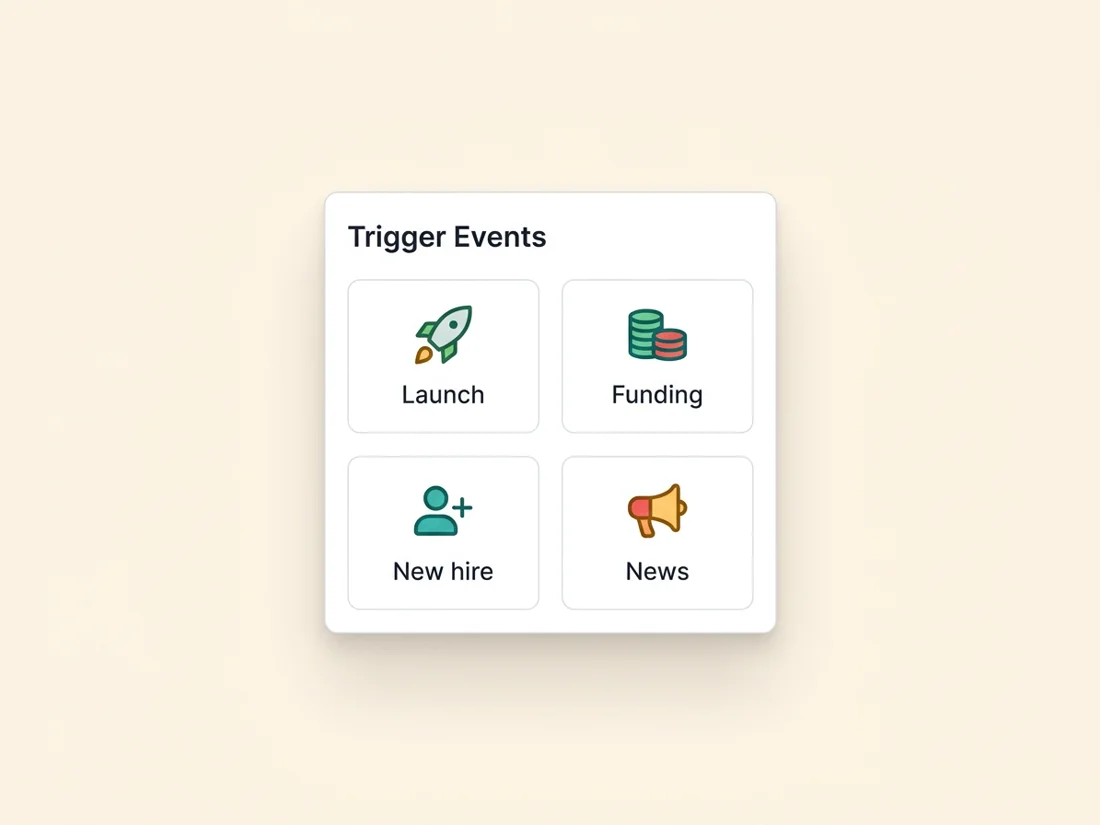
The difference between outreach that gets replies and outreach that gets reported is almost never the writing; it is whether the sender knew anything about the recipient. The minimum bar, per prospect, is one specific, current, verifiable fact that explains why this email, to this person, this week. The strongest facts are trigger events, because they carry their own urgency:
- Funding or expansion news: new money means new initiatives and new budget, and everyone knows it.
- A relevant hire or role change: the new VP is building a plan right now and is unusually open to inputs; your prospect starting a new role is the single highest-reply moment in their tenure.
- A launch, migration, or public change you can see from outside: the new product, the replatformed site, the job posting that reveals the initiative.
- Something they said: a podcast appearance, a conference talk, a post. Referencing a person's actual words is the strongest opener in outreach, provided you engage with the substance rather than flattering it.
Two minutes of checking a profile, the company's news page, and recent posts clears the bar. If nothing relevant surfaces, the honest conclusion is that this prospect belongs in a later batch, not that a generic email will do. And verify the address itself before anything else; research invested in mail that bounces is the purest waste in sales, which is why checking the address comes first in our own workflow.
How to write a sales email, line by line
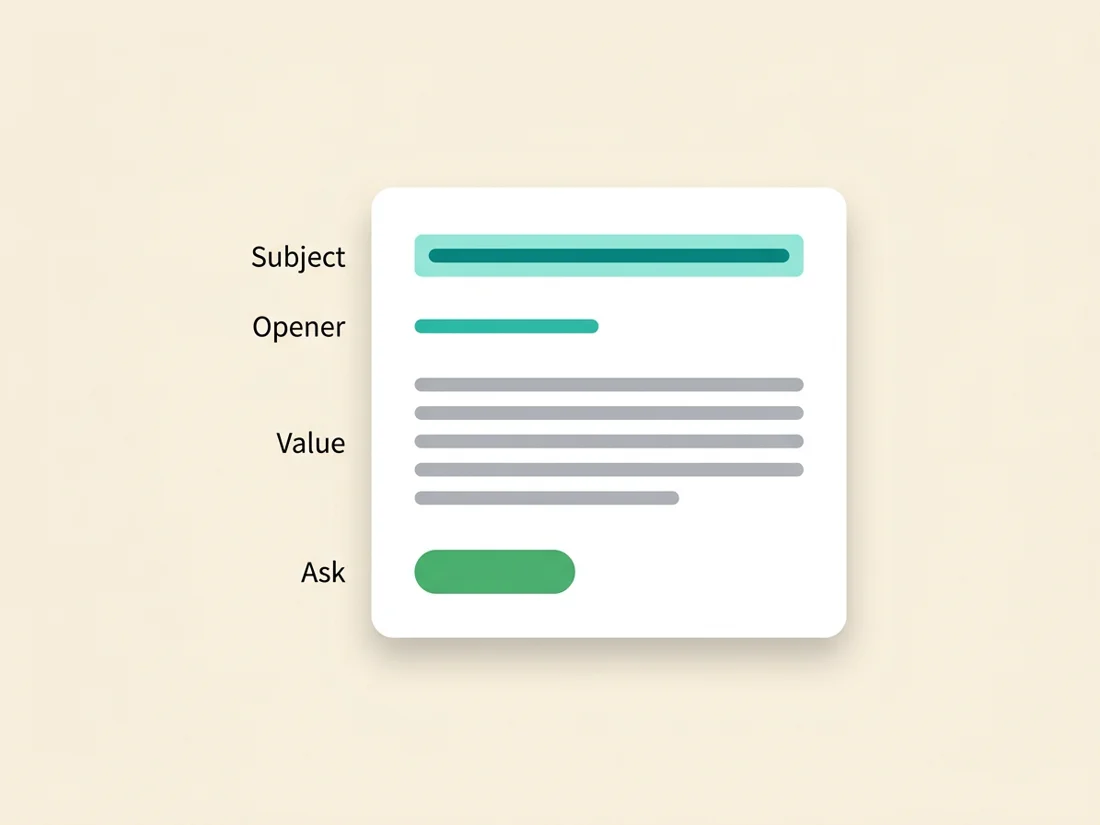
Four parts, in the order the reader meets them.
The subject: two to five words, lowercase, specific. "acme's checkout flow", "question re: your dmarc setup", "saw the series b". It survives triage because it looks typed, not templated, and it names something the reader owns. Everything in our subject line guide applies, with the cold-specific rules doubled: no title case, no benefit claims, never a fake "Re:".
The opener: their fact, first sentence, no introduction. The classic failure opens with the sender ("My name is X and I work at Y"), which answers a question nobody asked and wastes the preview line, since in plain-text mail your first sentence is the preheader. Open with the research instead: "Noticed the new self-serve tier launched last week." The reader's own world, correctly observed, is the only opener that reliably buys sentence two.
The value: one connection, one proof, three sentences maximum. Connect their fact to a problem you plausibly solve, and support it with one concrete proof point: "Teams launching self-serve usually see signup fraud spike within a quarter; two [industry] companies our size cut it by half without adding checkout friction." No feature lists, no adjectives doing the work evidence should do, and no paragraph two. The email's job is to open a conversation, not close a sale; the details are what the meeting is for.
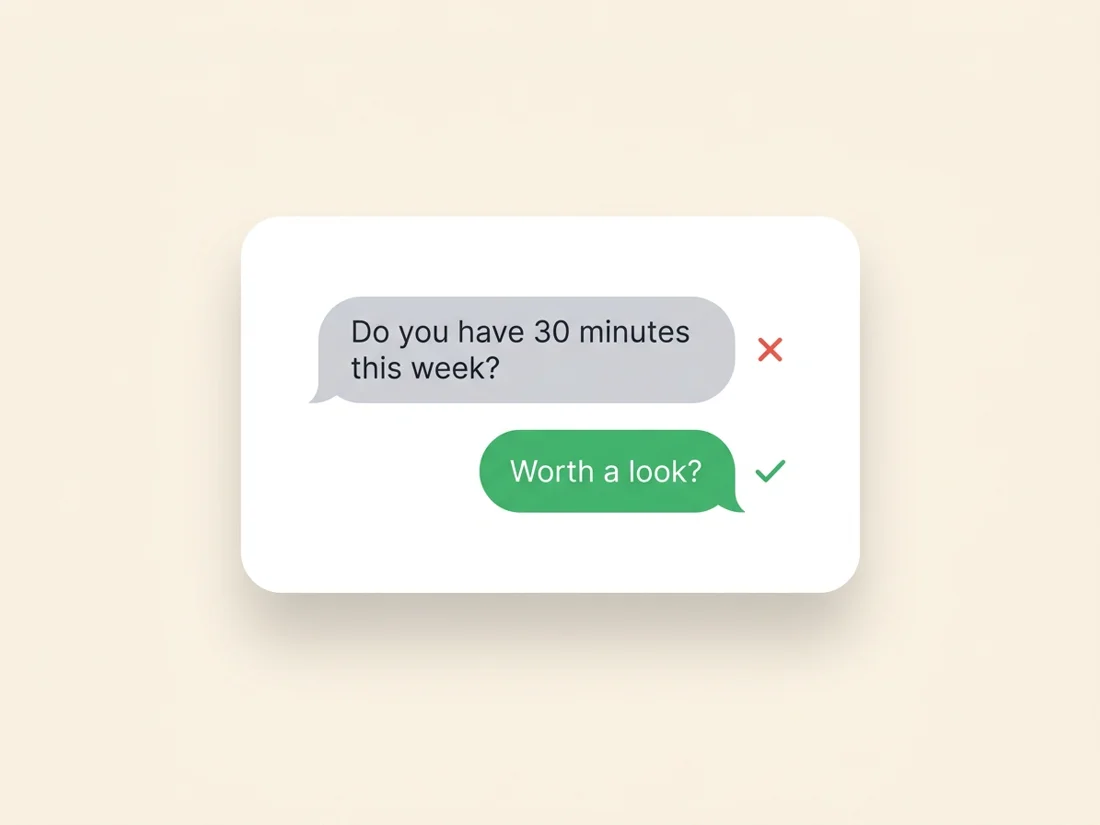
The ask: one question, answerable from a phone, in one thumb-stroke. "Worth a look?" out-performs "Do you have 30 minutes for a call next Tuesday or Thursday?" because it requests a judgment, not a calendar commitment, and a decision-maker will render a judgment from an elevator. Low-friction asks ("interested?", "should I send the two-pager?", "is this a you question or someone on your team?") convert triage attention into replies; high-friction asks convert it into deletes. One ask only; two questions halves the answer rate of both.
Signature: name, role, company, one link. No banners, no quote, no calendar link in the first touch (it presumes the yes you have not earned yet). Total length: under 120 words, plain text, zero images, per the cold-format rules in design and deliverability.
The anatomy applied. Before, the email everyone receives: subject "Revolutionize Your Revenue Operations!", body opening "Hi Jane, my name is Tom and I'm a Senior Account Executive at DataCorp, the leading provider of AI-powered revenue intelligence solutions trusted by over 500 companies worldwide..." and onward for two hundred words to a request for 30 minutes. Every element triggers the mass-mail pattern: the title-case exclamation subject, the self-introduction, the adjectives, the heavy ask. After, the same intent rewritten: subject "acme's q3 sales hires". Body: "Noticed you added six AEs last quarter. Teams scaling that fast usually hit a ramp-time wall around month two; two other [industry] sales VPs cut ramp by a third with one change to how reps get their first pipeline. Worth a look? [Name], [Company]." Fifty-one words, their fact first, one peer proof, one thumb-answerable ask. The second email is not more clever than the first; it has simply had everything deletable removed.
Five rules for reaching decision-makers specifically
Everything above applies to any prospect. Executives add five more constraints.
- 1. Lead with the business outcome, not the mechanism. A manager cares how your tool works; an executive cares what number it moves. "Cut onboarding time 40%" is executive language; "AI-powered workflow automation" is a delete. Translate every capability into the metric their board hears about.
- 2. Peer proof beats feature proof. The most persuasive sentence to a VP is what another VP did: "Two other heads of ops in [industry] run this play." Name names only with permission, but always name the role and segment; executives calibrate against peers, not against product tours.
- 3. Respect the calendar in the ask. Never open a first touch by requesting 30 minutes. The graduated path (a judgment, then a two-pager, then a conversation) lets the executive spend attention in the increments they actually have. The meeting request lands in touch two or three, after a signal.
- 4. Expect the forward, and write for it. A common good outcome is not a reply but a forward: "worth a look?" sent to their lieutenant. Write every line so it survives being read by a delegate with no context, and treat a forward-reply from a direct report as a win, because it is: you now have an internal sponsor and executive awareness at once.
- 5. Multi-thread from the start. Enterprise decisions are made by groups, so sequence the champion and the economic buyer in parallel with role-appropriate messages rather than pinning the whole deal on one inbox. This is where automation earns its keep: parallel personalized threads are unmanageable by hand and trivial for a sequence engine with exits.
And a note on scale, because the research minimum meets arithmetic eventually. Nobody hand-researches five hundred prospects a month, and the honest answer is tiering rather than cheating. Tier one, your top target accounts, gets the full individual treatment: real research, real trigger events, hand-written openers. Tier two gets segment-level personalization: one genuinely specific observation researched once per segment ("teams that just migrated to [platform] usually hit [problem]") applied to everyone the segment fits, which reads personal because the relevance is real even though the research was amortized. What no tier gets is the fake version: mail-merged flattery ("love what you're doing at {{company}}!") reads as exactly what it is and burns the list. Segment relevance honestly earned beats individual personalization faked, every time.
Follow-ups that add instead of bump
Most replies to cold outreach arrive from follow-ups, not openers, so the sequence matters more than the first email. The iron rule: every follow-up adds a new reason to reply. "Just bumping this" and "floating this to the top of your inbox" add nothing and teach the reader your mail can be safely ignored. The working pattern, spaced across roughly two weeks:
- Touch two (day 3-4): a new angle on the same problem: the one-sentence case study, the relevant benchmark, the specific question sharpened.
- Touch three (day 7-8): a genuinely useful artifact, no strings: the teardown, the checklist, the data point they can use whether or not they ever reply.
- Touch four (day 13-14): the graceful close: "Guessing the timing is off; I'll leave it here. If [problem] climbs the list, the offer stands." The close-out gets surprising replies precisely because it releases the pressure.
Then stop. Persistence past four touches converts nothing and generates the complaints that damage every other sequence you run. And every reply, including "no", exits the prospect from the sequence instantly, per the exit discipline in the drip campaign guide.
What comes back deserves its own playbook, because the reply is where deals are actually won and lost. Interested replies decay by the hour: answer inside sixty minutes if humanly possible, because the executive who replied is thinking about the problem right now and will not be this afternoon. Referrals ("talk to Sam") are wins: thank the executive, then open a fresh thread to Sam that leads with the referral ("Jane suggested I reach you"), the single strongest opener in all of outreach. Not-now replies get a graceful acceptance and a tag for a 90-day re-approach with a fresh trigger event, not a calendar-based nag. No means suppress everywhere and mean it. Classifying and routing these reply types is exactly the job our Reply Agent automates inside guardrails, which matters at volume because the cost of a slow answer to an interested reply is the whole sequence's work.
On send timing: the folklore about magic days is mostly noise, but two rules hold. Send during the recipient's working hours, because mail arriving at 3 a.m. local time advertises automation, and mid-morning tends to catch the between-meetings triage this whole article is written for. More important than the hour is spacing consistency: erratic bursts look like a campaign turning on and off, while steady paced sending, which a proper sequence engine handles automatically, looks like a person who follows up when they said they would.
The part writing cannot fix
One last section, because the ordering matters more than anything above it. A perfect sales email converts at exactly 0% from the spam folder, and decision-maker inboxes sit behind the strictest filtering in email: corporate gateways, Microsoft 365 policies, and executive-assistant rules, the gauntlet mapped in our B2B email guide. So the writing sits on top of a stack it cannot substitute for: verified prospect addresses (executives change roles constantly, making their addresses the fastest-decaying in B2B), warmed sending domains separate from your house reputation, authentication at full enforcement, throttled sending with automatic brakes, and placement measured with seeds rather than inferred from silence.
That stack is the half we own. SpamCipher is the cold email platform for unlimited, automated cold email, the only platform that can promise you 90%+ inbox placement, and everything in this article assumes that promise is being kept underneath you: the address checked before the research minute is spent, the sequence exits firing on every reply, the abuse monitor braking before a complaint trend becomes a reputation event. Write the email this guide describes, send it on that pipeline, and both halves of the job are done properly, which is the only combination that reliably puts your words in front of the person they were written for.
Put great writing on great infrastructure
Verified decision-maker addresses, warmed domains, sequences with real exits, and placement you can measure. Unlimited, automated cold email with 90%+ inbox placement, so the two seconds you wrote for actually happen.
Send your next sequence