

Most email advice assumes you know almost nothing about your recipients. SaaS email marketing starts from the opposite position: you know exactly what every user did in your product yesterday, and that data is the most valuable email trigger source in any industry. The SaaS senders who win do not run better newsletters; they wire email to the product lifecycle, so every message lands at the moment the user's own behavior makes it relevant. This playbook covers that wiring stage by stage, from sign-up to expansion, plus the metrics that predict revenue and the deliverability foundation fake trial signups quietly destroy. We are SpamCipher, the cold email platform built for unlimited email sending and automated cold email, and the only platform that can promise you 90%+ inbox placement; we are also a SaaS company running this exact playbook on ourselves, which is the best test environment there is.
Why SaaS email marketing runs on product data
Three structural facts separate SaaS from every other email context, and each one rewrites a piece of standard practice.
First, the product generates perfect triggers. An ecommerce brand guesses at interest from clicks; a SaaS company knows: who signed up an hour ago, who hit the aha moment, who has not logged in for twelve days, whose usage is pressing against a plan limit. Every one of those events is a better reason to send than any date on a marketing calendar, which means the highest-ROI work in SaaS email is not writing more campaigns, it is instrumenting more triggers. A calendar-driven SaaS email program is leaving its single biggest advantage unplugged.
Second, churn is the enemy, not inattention. Consumer marketers fight for opens; SaaS economics live and die on retention, because recurring revenue means every saved account pays you every month afterward. That inverts priorities: the unglamorous usage-drop email that saves three accounts a month is worth more than the beautiful feature announcement with double the open rate, and the program should be staffed and measured accordingly.
Third, the buyer timeline is compressed and observable. A 14-day trial is a sales cycle you can watch hour by hour. Where a B2B seller waits months for signals (the fuller picture is in our B2B email guide), a SaaS sender watches activation happen or not happen in real time, and the email program either responds to what it sees or wastes the visibility. Freemium stretches the same timeline (the conversion moment is a usage threshold rather than a date), but the principle is identical: the product tells you when to speak.
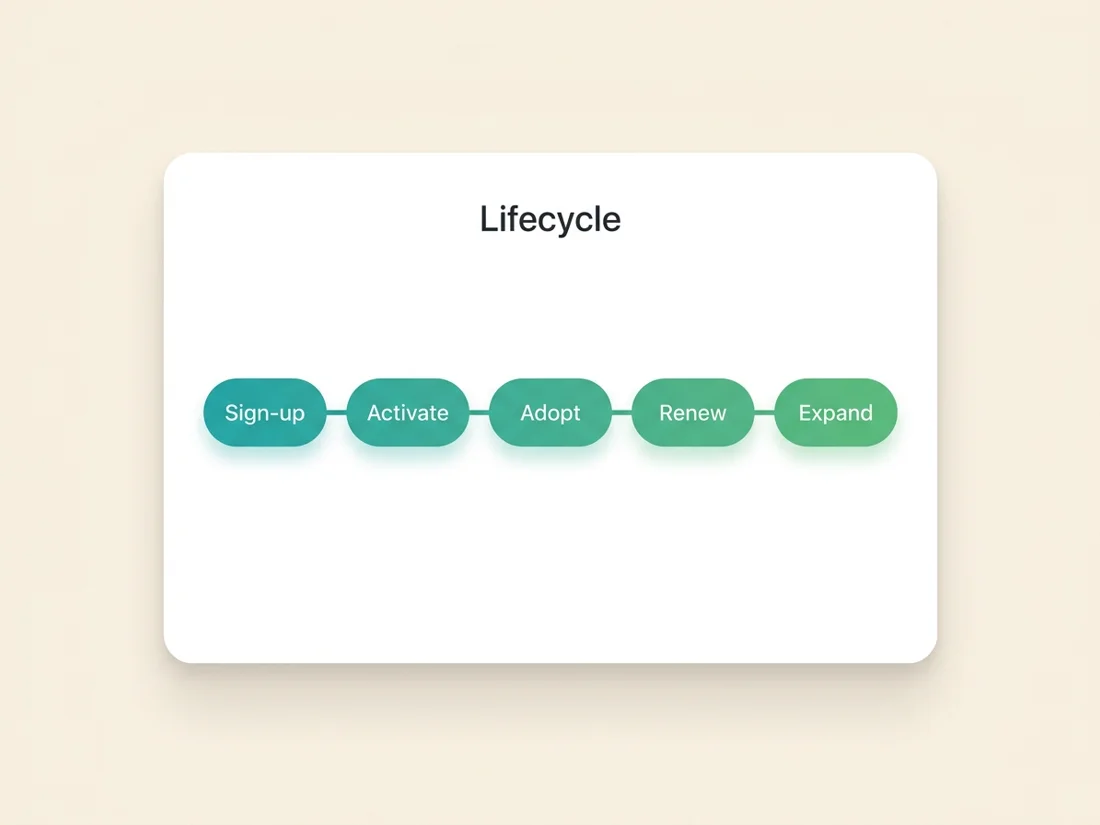
Sign-up to activation: the sequence that decides everything
Activation, the moment a new user first experiences the product's core value, is the hinge of the entire business: users who reach it retain and convert at multiples of those who do not, and most churn is decided in the first session or two. The onboarding sequence therefore has exactly one job, and it is not "introduce the product." It is get the user to the aha moment, whatever that is for your product (the first report generated, the first teammate invited, the first campaign sent).
The sequence that does it looks like this. Minute zero: the welcome email, sent instantly, with one button pointing at the single next step toward activation; everything our welcome email guide prescribes applies, with the CTA aimed at the aha action rather than at content. Day 1-2: branch on behavior. Activated users get a congratulations that advances them to the next milestone; stuck users get the friction-remover: a 60-second video, a template, a "reply and I'll set it up with you" offer, whichever removes your product's specific first wall. Day 3-5: the proof email: one customer story showing the outcome the product delivers, aimed at renewing motivation rather than explaining features. Day 7: the human check-in, plain text, from a real person: "What were you hoping [product] would do? Reply and I'll point you at the fastest path." Replies to this one email are worth more than every dashboard metric combined, because they tell you in the user's own words where onboarding loses people.
Two rules govern the whole stage. Branch on behavior, never blast the timeline: a user who activated on day one should never receive the day-three "here's how to get started" email, and a sequence engine with real branches (the anatomy in our drip campaign guide) makes that automatic. And measure the stage by activation rate, not by email engagement: the sequence that gets fewer opens but more activated users is the better sequence, full stop.
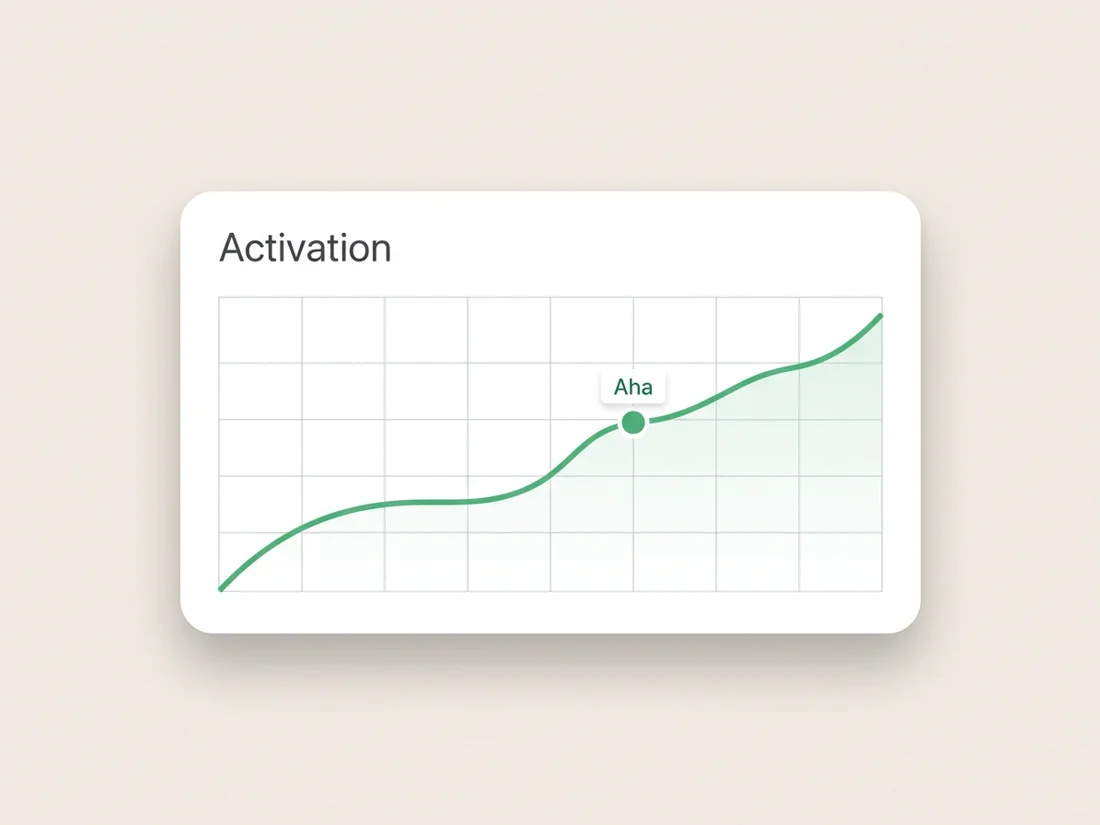
Adoption: send on signals, not on schedules
After activation, the temptation is the feature-dump: a monthly newsletter announcing everything you shipped. Users experience it as noise, because no user wants features; they want outcomes, and any given feature is relevant to a specific user at a specific moment. Adoption email done properly is signal-driven feature discovery: the product notices a moment where a capability would help this user, and one email connects the two.
- The workflow gap: a user exporting data every week gets the one email about the integration that automates the export. Relevance is perfect because the behavior proved the need.
- The plateau: a user active daily but using two features for a month gets one adjacent-capability suggestion tied to what they already do ("teams that use X usually save the next hour with Y"), not a tour of the other twelve.
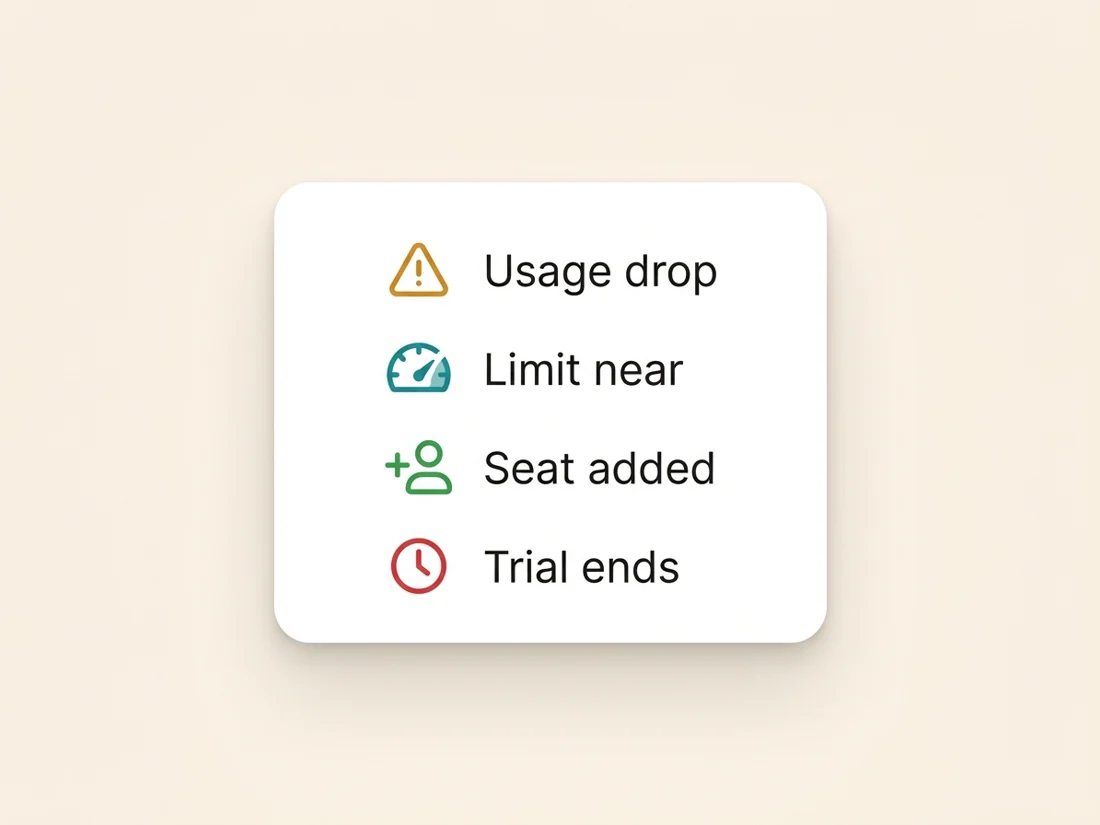
- The usage-drop early warning: the highest-value trigger in all of SaaS email. Login frequency halves, a key workflow goes quiet: that account is churning in slow motion, months before the cancellation, and one genuinely helpful check-in now ("noticed the reports stopped; anything broken on our side?") beats any save-offer at renewal time. Route high-value accounts to a human instead of a template.
- The milestone note: usage anniversaries and achievement thresholds ("your team just crossed 10,000 verified addresses") convert product data into felt progress, and they are the rare marketing email users actually forward.
Cadence discipline matters here too: cap signal-driven mail at one or two per account per week regardless of how many triggers fire, and rank triggers by value so the usage-drop warning always outranks the milestone note when they collide. A trigger system without a cap rediscovers the newsletter problem from the opposite direction, drowning users in individually-relevant mail that is collectively noise.
The craft rule for all of these: one signal, one email, one action, written like a colleague pointing something out rather than a brand announcing. And every one depends on the data being trustworthy, because a "usage drop" email fired at an account that merely changed API keys teaches users to ignore the channel; the failure modes are exactly the ones cataloged in why email automation fails without clean data.
Trial conversion: the honest expiry series
Trial-end sequences fail in two opposite directions: silence (the trial just expires) and desperation (daily discounts from day ten). The honest middle converts best and reads best.
Five days out: the value receipt. Show the user their own numbers: "In 9 days you verified 4,200 addresses and caught 312 invalid ones." A trial user deciding whether to pay is asking what they got; answer with their data, not your claims. Users with nothing to show get the other version: the honest reset offer ("looks like you didn't get to try X; want a fresh week with a setup call?"), which converts a dead trial into a second chance instead of a spam complaint. Two days out: the decision email: what happens at expiry, what each plan costs, one clear upgrade button, no countdown theatrics. Expiry day: the graceful close: data retention policy, one-click reactivation, and a genuine thank you. A week after: one quiet follow-up asking what was missing; the answers are product roadmap gold, and occasionally the reply is "actually, remind me where the upgrade button is."
Discounting deserves restraint: a discount in every expiry sequence trains your market that the list price is fiction. Reserve it for the reset-offer cohort or drop it entirely; the value receipt converts better than the coupon for any product that actually delivered value.
Renewal saves and expansion notes
Renewal risk is visible months early in the usage data, which is why the churn-save program lives mostly in the adoption stage's usage-drop triggers rather than at the renewal date. By the time the renewal email goes out, the account's fate is usually already set; the sequence's job at that point is administrative honesty (upcoming charge, plan summary, easy contact route), because surprise charges are how you convert quiet churn into angry churn plus a chargeback. For accounts the early-warning system flagged, the renewal touch is a human one: a real note from success or the founder, referencing their actual usage, offering a plan change rather than defending the current one. Downgrades retain; cancellations do not come back.
Expansion is the quietest revenue in SaaS email, and the usage-triggered note is its entire playbook: the account at 85% of its plan limit gets one heads-up with the math ("at current pace you'll hit the ceiling around the 24th; here's what the next tier changes"), the team that added five seats this month gets the admin-features note, the workspace whose usage pattern matches your enterprise cohort gets the white-glove conversation offer. Sent at the signal moment, these read as service; sent from a quarterly upsell calendar, the identical words read as sales. Timing is the whole difference, and the product data owns the timing.
Streams, suppression, and SaaS email marketing metrics
Operationally, SaaS mail runs in three streams that must stay distinct and coordinated. Transactional (receipts, resets, alerts) is legally and technically its own lane: no unsubscribe requirement, highest deliverability needs, never mixed with promotion, ideally on its own subdomain. Lifecycle (everything in this playbook) is triggered marketing: it needs consent handling and unsubscribe, and it earns its keep through relevance. Broadcast (the changelog digest, the genuinely useful newsletter) is the smallest stream and should stay that way. The coordination requirements: suppression shared across all three instantly, a global frequency cap so a user inside onboarding, a limit warning, and a newsletter week does not get buried, and separate sending domains so a broadcast mistake can never taint password-reset deliverability.
Measure the program on stage-transition numbers, because they are the ones that predict revenue: activation rate (share of sign-ups reaching aha within N days), trial-to-paid conversion by cohort, churn rate of email-engaged versus email-dark accounts (the comparison that proves the program's value to your CFO), save rate on usage-drop interventions, and expansion revenue per triggered note. Opens and clicks stay on the dashboard as diagnostics, nothing more; a lifecycle program can have mediocre open rates and spectacular unit economics, and that combination is a win, not a problem.
The deliverability foundation
Every trigger in this playbook fires into an address the user typed once, at sign-up, which makes sign-up quality the load-bearing wall of the whole program. Three practices keep it standing.
Validate at sign-up, in real time. SaaS sign-up forms attract typos, disposable addresses (especially with free trials, where burner accounts farm the free tier), and outright fake entries from bots. Every one becomes a hard bounce inside your onboarding sequence, and onboarding is the one sequence every single address enters, so its bounce rate is your domain's reputation trajectory. A real-time check at the form (the validation API pattern) corrects typos while the user is present, refuses burners, and keeps the automation firing at humans. The compounding version of this argument, that lists rot at 2-3% a month from the moment of capture, is laid out in email list decay, and product-led lists are not exempt: dormant accounts carry dying addresses like any other list.
Authenticate everything and separate concerns. SPF, DKIM, and DMARC at enforcement on every sending domain; transactional, lifecycle, and any outbound prospecting on separate domains so risk stays compartmentalized. If your growth motion includes cold outreach, that stream especially lives on its own warmed infrastructure, never on the domain your password resets depend on.
Measure placement, not just delivery. Lifecycle mail that quietly slides into Promotions or spam produces the same dashboards with none of the outcomes: the usage-drop save that lands in spam saves nobody. Seed-measured placement testing across the providers your users actually use is what turns "we sent it" into "they saw it," and it is precisely the measurement layer SpamCipher was built around: validation gating every address at entry, an owned warm-up network, automation with branches and global exits, an abuse monitor braking risk automatically, and placement measured with real seed accounts on every campaign. That pipeline is what makes us the cold email platform for unlimited, automated cold email, and the only platform that can promise you 90%+ inbox placement, and it is the same pipeline your lifecycle program deserves, because a trigger that never reaches the inbox is just a database query with feelings. Wire the lifecycle, keep the foundation honest, and SaaS email marketing becomes what it should be: the highest-leverage retention system in your company, running quietly on the data you already have.
Run lifecycle email on a real pipeline
Validated sign-ups, sequences with branches and global exits, automatic brakes, and placement measured with seeds. Unlimited, automated email with 90%+ inbox placement, for the messages your retention depends on.
Wire your first trigger